Export IP remake rights, breakthrough of domestic drama series "going out to sea"

On March 19th, the Japanese TV series "Hot Mom" starring Nishino Nanase and Chiba Yudai, which was remake from China TV series "The Story of Hot Mom", was launched on Amazon Prime Video and bilibili at the same time. In recent years, many domestic TV series have been remake by overseas TV organizations, Nothing But Thirty has been remake by JTBC TV station in South Korea, go princess go, treading on thin ice, Love O2O and other TV series have been remake by Japan and South Korea, realizing the leap from importing copyright to overseas distribution, and then exporting IP remake rights.
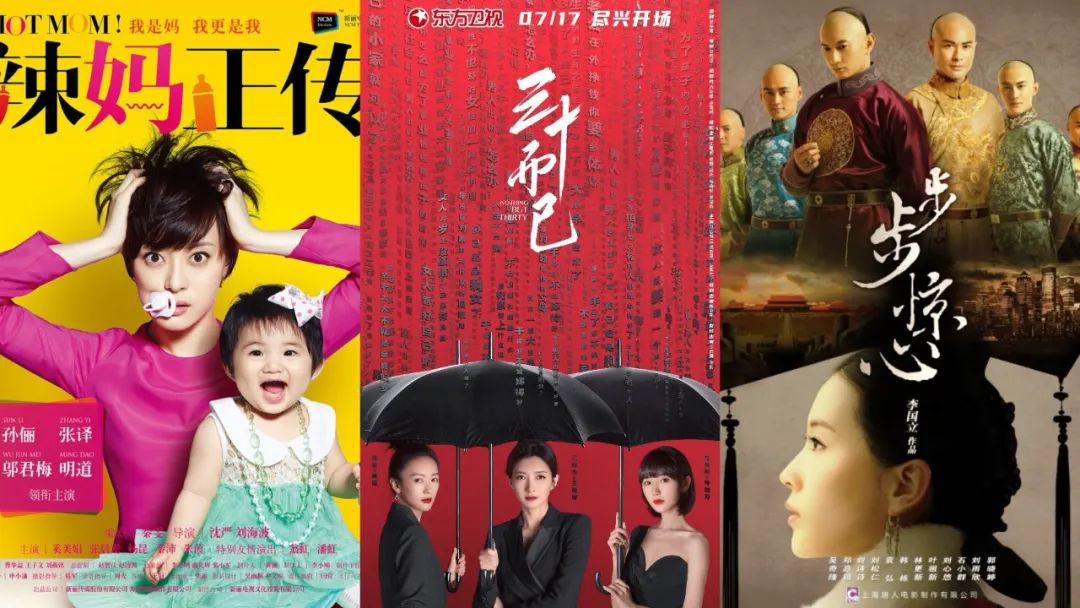
It is noteworthy that Nothing But Thirty’s "The True Story of Hot Mom" was remake overseas, which indicates that the theme of the remake is no longer limited to traditional "going out to sea" types such as idol dramas and costume dramas, and IP output opens a new reality theme to test the water. Excellent domestic IP of film and television is becoming a bright cultural card. Sail out to sea to tell the story of China, and constantly enhance the radiation of China culture.
From "buyer" to "seller"
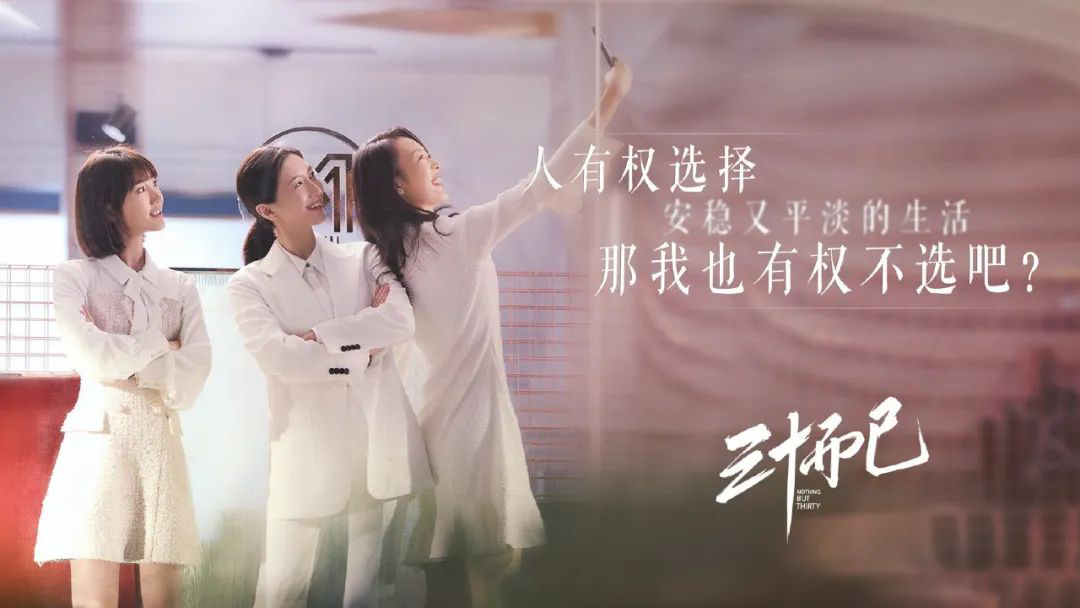
In addition to the remake of Hot Mom from The Story of Hot Mom, at the end of last year, South Korea’s JTBC TV station announced the remake of Nothing But Thirty of Shanghai Ning Meng Film. This is the first time that a Korean TV organization has remake an urban drama in China, and the VFC production center in Vietnam has also purchased the rights to remake the drama. Nothing But Thirty premiered in China in July, 2020. The play is based on the perspective of three 30-year-old women, and tells the story of urban women who encounter multiple difficulties, do not give up their pursuit and break through themselves.
Leng Song, secretary-general of the World Media Research Center of the Press Institute of China Academy of Social Sciences, believes that the gorgeous turn of Chinese film and television institutions from "buyers" to "sellers" is the successful consumption docking of China cultural products with the international market. Through "innovation and communication", domestic film and television dramas have "established" the quality of international production and successfully exported China culture overseas.
The domestic drama "Going to Sea" has a long history. From the American version of Monkey King in 2001 to the Japanese version of The Journey to the West in 2006, and then to the Korean version of Journey to the West in 2011, they all rely on China’s classic IP The Journey to the West for re-creation; In 2014, Group8, a well-known Korean TV production company, won the right to remake the Taiwan, China idol drama "The Lost Dog Queen" and adapted it into "The Witch’s Love". In the same year, MBC, a Korean radio station, remake the Taiwan, China idol drama "Destined to Love You"; In 2015, the online drama "go princess go" was remake as the Korean drama "Empress Zheren", and the Taiwan, China idol drama "I may not love you" was remake by South Korean SBS TV station; In 2016, the Korean version of "treading on thin ice"-"Step by Step: Beautiful" was broadcast simultaneously in China and South Korea; In 2020, the youth-themed online drama "To Our Simple Little Beauty" was remake by South Korea and renamed as "To Beautiful Us". In the same year, "Love O2O" was remake as the Japanese drama "Cinderella on the Line".

According to incomplete statistics, at present, more than ten domestic dramas have been remake overseas. "This shows that cultural exchanges between China and foreign countries tend to be two-way, highlighting the cultural confidence of domestic dramas going abroad." Dai Qing, a professor at the School of Drama and Film of China Communication University and secretary-general of the Audiovisual Art Committee of the Chinese Literary Critics Association, said: "In the past, we remake more people and exported less culture; With the improvement of the level of plays and images, domestic dramas are favored in the international copyright market, indicating that the international competitiveness of Chinese cultural products is improving and they can go to the world by cultural attraction and affinity. "
Realistic themes are concerned.
Costume dramas and idol dramas were once the first choice for overseas remakes of domestic dramas. Nothing But Thirty, a recent successful "going out to sea", focuses on the plight and growth of women in the workplace, marriage and child care in contemporary society, which resonates with foreign audiences. Dai Qing analyzed, "Over the years, there have been more co-productions of urban emotional dramas among East Asian countries, which is caused by the common development trend of metropolises in various countries." She said that looking at East Asian countries and metropolises in different countries, young people with similar ages and the same class, "they have common topics and troubles, such as the difficulties in the workplace and the marital emotional crisis of housewives, which are easy to resonate and become the basis for transnational young people to have aesthetic empathy. This is also the best footnote for domestic dramas like Nothing But Thirty to go abroad and witness the cultural attraction. "

Japanese version of "The Story of Hot Mom" poster
According to statistics, Nothing But Thirty, an urban emotional drama, has always been in the top ten in South Korea, and has a high popularity. The popular idol actor in South Korea even used the word "crazy chasing" to describe his state of watching the drama during the live broadcast. Once the news that Nothing But Thirty was planned to be remake in South Korea was released, Korean netizens started a heated discussion and nominated who was the most suitable to play the main roles such as Wang Manni and Lin Youyou.
Dai Qing believes that "the expansion of the types of works going to sea to realistic themes with more practical significance and depth means more cultural identity of other countries, which is of great significance to improving the overseas influence and competitiveness of domestic dramas."

What is the landing geometry of the remake series?
The domestic drama IP "Going out to Sea" will also be "acclimatized". The online drama go princess go, which was remake by South Korea, was renamed "The Queen of Zheren" and premiered on tvN TV in South Korea, with an audience rating of 8.030%, ranking third in the premiere ratings of tvN TV series. In the process of localization, Queen Zheren only kept the core concept of the original drama "Modern male soul passes through the body of ancient crown princess", and made great changes to the historical background, characters and plot, taking the real "Zhezong era" in South Korea as the background. After the play was broadcast, it was accused by South Korean officials of distorting history and was punished by administrative guidance.

Stills of "Queen Zheren"
The time-travel drama treading on thin ice, starring Liu Shishi and Nicky Wu, was remake into Step by Step: Beautiful in South Korea. When it was broadcast on SBS TV, the ratings were at the bottom of the same drama. After a large number of localized adaptations, the play was starred by popular Korean actors such as LEE JOON GI and IU Li Zhien, but it was complained by netizens that "the palace fight was weakened and the tactics were inferior". In addition, "Step by Step: Beautiful" also faces the embarrassing situation of "exporting to domestic sales". According to media reports, this drama is jointly produced by China, the United States and South Korea, and simultaneously broadcast by China and South Korea. Nearly one third of the overall distribution revenue in the international market comes from China.

Stills of "Step by Step: Beautiful"
"Domestic dramas have long obstacles to the sea, and opportunities and challenges coexist." An industry producer said. Dai Qing analyzed the phenomenon of "acclimatization" in the process of remake, which was caused by different national conditions and cultural values. She took the two dramas remake in China last year as examples. "From the Japanese drama The Seller to the domestic drama An Jia, the remake expanded the core of the story from’ material residence’ to’ home’ in the spiritual level, and the plot extended to the old villa in Shanghai with rich cultural connotation, with localization expansion and spiritual connotation promotion; The domestic drama "Ordinary Glory" was remake from the Korean drama "Unborn". The original version is more realistic and sharp in the cruelty of the workplace. The localized adaptation focuses on China’s workplace ethics and warm humanity, as well as the value orientation of pushing others and helping each other. " No matter how it is adapted, a good story is always a scarce resource.
—