"Lack of Medicine" and "Lack of Medicine": A Perspective of Traditional Chinese Medicine in Big Countries
In recent years, with the enhancement of people’s health concept, Chinese medicine is gaining the trust and recognition of the public with its unique advantages. At the same time, however, the development of traditional Chinese medicine also faces the problems of lack of quality standards, shortcomings in technology research and development, and the quality of medicinal materials and "westernization".
Solving the problem of medicinal materials, balancing tradition and modernity, and handling the relationship between traditional Chinese medicine and western medicine are the problems that must be faced in the further upgrading and development of traditional Chinese medicine.
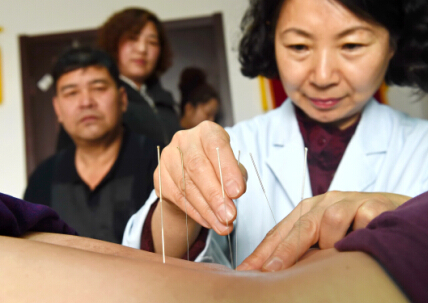
New Trend: Looking for "Slow Chinese Medicine" in "Fast Life"
The results of the first national survey of TCM health care literacy show that the popularization rate of TCM science in China is 84.02%. In the fast pace of modern social life, "slow Chinese medicine", which pays attention to body conditioning and maintenance, is increasingly sought after by people. The concept and practice of "treating diseases before they occur" and keeping in good health have been continuously integrated into modern life, giving off new vitality and vigor.
Chinese medicine becomes the first choice for "preventing diseases"
"Director Wu, I am here again. I feel that my neck is not very comfortable and I want to do another massage." Li Chen, a citizen, greeted the doctor warmly in the "Prevention of Disease" specialty of the Affiliated Hospital of Chengdu University of Traditional Chinese Medicine.
Li Chen, 25, is a frequent visitor to the specialty of "Prevention of Diseases". "Last year, the cervical vertebra suddenly’ couldn’t turn’, and I came here for massage treatment. I didn’t expect that I only massaged once and spent tens of dollars, so my neck could move normally." Li Chen said that from then on, whenever her neck and shoulders were uncomfortable, she would come here for treatment.
Wu Jie, director of the Center for Prevention of Disease in the Affiliated Hospital of Chengdu University of Traditional Chinese Medicine, said that with the development of society and the deepening of people’s understanding of health, the concept of "prevention of disease" in TCM, which emphasizes the overall concept and syndrome differentiation, is gaining more and more recognition. In fact, "preventing diseases before they occur" is a kind of timeless wisdom, which can not only reduce the occurrence of diseases, block the deepening or transformation of diseases, but also reduce medical expenses and achieve "win-win".
Lin Jiantong, who works in a state-owned enterprise in Fuzhou, began to feel pain in his legs and feet from time to time in 2014, and later he could not sleep peacefully at night. He first went to the nearby big hospital for examination, and all the indicators were normal. After taking painkillers for a while, Lin Jiantong decided to see Chinese medicine. After receiving acupuncture in the Third People’s Hospital affiliated to Fujian University of Traditional Chinese Medicine for a period of time, he obviously felt "relaxed" and could sleep soundly at night.
In the TCM Health Management Center of the hospital, the doctor made a detailed health assessment for Lin Jiantong by using the self-developed "TCM Health Assessment System". The report recorded in detail the results of "seeing, hearing and asking questions" and his eating habits, and also gave a comprehensive physique identification result, giving a health conditioning plan from five aspects: meridian conditioning, daily living conditioning, exercise conditioning, diet conditioning and emotional conditioning.
"For the first time, I have such a thorough understanding of my physique." Lin Jiantong said that this conditioning program is a comprehensive adjustment from diet to mental state, and doctors will adjust the program at any time according to solar terms and physical conditions at different stages.
In order to meet the people’s increasing demand for Chinese medicine, Nanyang, Henan Province has further strengthened the construction of Chinese medicine halls, which has revived the vitality of Chinese medicine in primary health centers. At present, Nanyang has realized that there are Chinese medicine halls in every township, and the "Chinese medicine hall" with good service and wide coverage has become the highlight of primary medical work.
Traditional Chinese Medicine Health Care "Applauded and Called"
As the wisdom of human survival and the art of self-management of life, TCM health preservation has become more and more popular among the people with the improvement of living standards.
"Three-Nine Sticks" and "Three-volt Sticks" … In many places, Chinese medicine sticking plaster has become a popular health preserving method among middle-aged and elderly people. Yang Jianmin, a 55-year-old citizen of Chengdu, knows the secret: the yang is the most abundant in dog days, and there is heat and dampness that plagues the human body. The application is mainly to eliminate dampness and drive away the cold in the body; Yin is the most abundant in three or nine days, and yang is restrained and declining. Sticking is mainly to improve human yang and keep out the cold. "It is also necessary to choose different dressings according to different constitutions, which varies from person to person." Lao Yang said.
Not only urban residents, but also in rural areas, Chinese medicine is also an important choice for the masses to maintain health and recuperate.
Ma Qisan, an old Chinese medicine practitioner in Heyan Village, Xinglong Town, Xiuyan County, Anshan City, Liaoning Province, has been practicing medicine for 60 years. He told reporters that many villagers come to the clinic to prescribe Chinese medicine supplements, such as warming yang and invigorating qi, dehumidifying and drying, consolidating the foundation and tonifying the kidney, and so on. In terms of price, for example, the soup for regulating the liver is from 400 yuan to 500 yuan every month, which is generally affordable for villagers.
Colla Corii Asini is boiled with black sesame seeds, Shaoxing wine, walnut kernels and crystal sugar, cooled and solidified, cut into four squares and wrapped in wax paper. For this kind of colla Corii Asini cake sold in the market, Wang Lijing, a 37-year-old Shenyang white-collar worker, buys some at intervals and eats one half an hour before dinner, in order to nourish yin and invigorate qi for beauty beauty.
Miss Yang, who is engaged in secretarial work in a large construction enterprise, often runs around the world with the construction team. Whether in Africa or Asia, there are always Chinese herbal medicines such as Astragalus, Angelica sinensis and Lycium barbarum in her suitcase. "I will use these herbs with bamboo fungus, yam soup and mutton soup to replenish qi and blood. If it is summer, it is best to make medlar and tremella porridge, so that you can taste the taste of your hometown and have health care functions all over the world. "
Zheng Meifeng, director of the Third Affiliated Hospital of Fujian University of Traditional Chinese Medicine, who has been a doctor for more than 30 years, said: "In recent years, people have become more and more aware of the special role of Chinese medicine, and Chinese medicine health care is becoming a huge market. However, at present, many people have misunderstandings about Chinese medicine health care and believe in some specious propaganda, which may backfire. For example, there are endless health columns and articles in various TV programs and newspapers and magazines, which are dazzling, but many statements are too general and do not start from the physical and health differences between people, indicating that the spread of Chinese medicine still has a long way to go. "
From National Strategy to International Opportunity
The outline of the strategic plan for the development of Chinese medicine proposes that by 2020, everyone will basically enjoy Chinese medicine services, and the Chinese medicine industry will become one of the important pillars of the national economy; By 2030, the service field of traditional Chinese medicine will achieve full coverage, and the health service capacity of traditional Chinese medicine will be significantly enhanced, making greater contributions to economic and social development.
Since last year, Tu Youyou has won the 2015 Nobel Prize in Physiology or Medicine, the draft law on traditional Chinese medicine has been submitted to the National People’s Congress Standing Committee (NPCSC) for deliberation, and the 60th anniversary meeting of the Chinese Academy of Traditional Chinese Medicine has been held … There have been many major events in the field of traditional Chinese medicine in China, which have attracted much attention. Experts said that both the implementation of the national strategy and the opportunity of internationalization will make the development of Chinese medicine show a strong momentum.
"There were not many patients when they first started business. Many people found the Chinese medicine clinic with a try attitude after being ineffective in other hospitals, and the result was very good," said Dr. Liang from Tongrentang Store in Dubai.
Overseas, doctors are kind-hearted and help the world to keep healthy. The concept advocated by Chinese medicine has gradually made Chinese medicine accepted and won word of mouth, and more overseas friends have begun to understand and trust Chinese medical treasures. Today, Tongrentang has opened more than 110 overseas retail terminals and treated more than 30 million overseas patients.
According to statistics, Chinese medicine has spread to 183 countries and regions in the world, with more than 100,000 acupuncture clinics, more than 300,000 acupuncturists and more than 50,000 registered Chinese medicine practitioners. Traditional Chinese medicine acupuncture has been included in the "representative list of human intangible cultural heritage". Our government has signed more than 80 cooperation agreements with foreign governments and regional authorities containing Chinese medicine.
After the country put forward the "One Belt, One Road" strategy, Chinese medicine has been frequently included in the topics of summit talks between China and foreign countries, becoming an important field of cooperation at the national level, and Chinese medicine is facing unprecedented strategic opportunities. In June 2015, Zoje Chinese Medicine Center was established, which became the first Sino-foreign cooperation project in the health field.
The situation of promoting the development of Chinese medicine by all parties is constantly forming. In July last year, the inaugural meeting and the first academic annual meeting of the Community Service Committee of the World Federation of Chinese Medicine Societies were held in Beijing. Nearly 500 Chinese medicine workers from Chinese medicine clinics, Chinese medicine halls and health care institutions in China, the United States, Canada and other countries (regions), as well as experts and scholars in related fields, gathered at the meeting to discuss the development of primary Chinese medicine health services.
"If the Chinese medicine service system is compared to a pyramid, the Chinese medicine services provided by Chinese medicine museums, Chinese medicine halls and health care institutions are the bottom of the pyramid. However, the bottom of this tower is not strong enough, and the level of grassroots Chinese medicine workers is uneven; Service standardization has yet to be explored. " Micheal Lee, president of the Community Service Committee of the National Hospital of Traditional Chinese Medicine, said that building such a platform for grass-roots Chinese medicine practitioners to exchange clinical experience, popularize TCM health knowledge and methods, and carry out academic research is conducive to improving their overall level, popularizing medical experience and service model, and guiding them to correctly apply TCM theory to carry out health service activities. ※