By 2030, "flying" will become a daily commute! This emerging field is being defined by China.
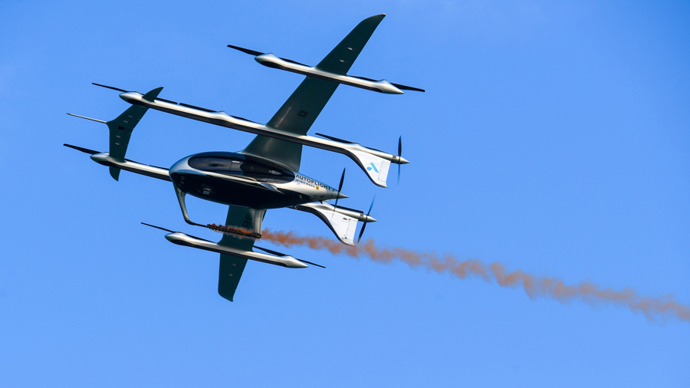
Some time ago, the Central Economic Work Conference promoted the low-altitude economy to the height of strategic emerging industries, and this field is also becoming a "new track" that many cities focus on.
So, do you know what the low-altitude economy really contains? What is the process of its global development? How will it affect people’s work and lifestyle?
Emerging field, China definition.
When it comes to low-altitude economy, many people immediately think of drones. But the low-altitude economy cannot be equated with the drone industry.
According to the official definition, low-altitude economy is a comprehensive economic form driven by all kinds of low-altitude flight activities of manned and unmanned aircraft, and radiation drives the integration and development of related fields.
In other words, the low-altitude economy includes not only drones, but also manned aircraft. However, due to the immature technical and safety conditions, the commercial degree of low-altitude manned aircraft is not high. Therefore, the focus of discussion on low-altitude economy is still on the application of drones.
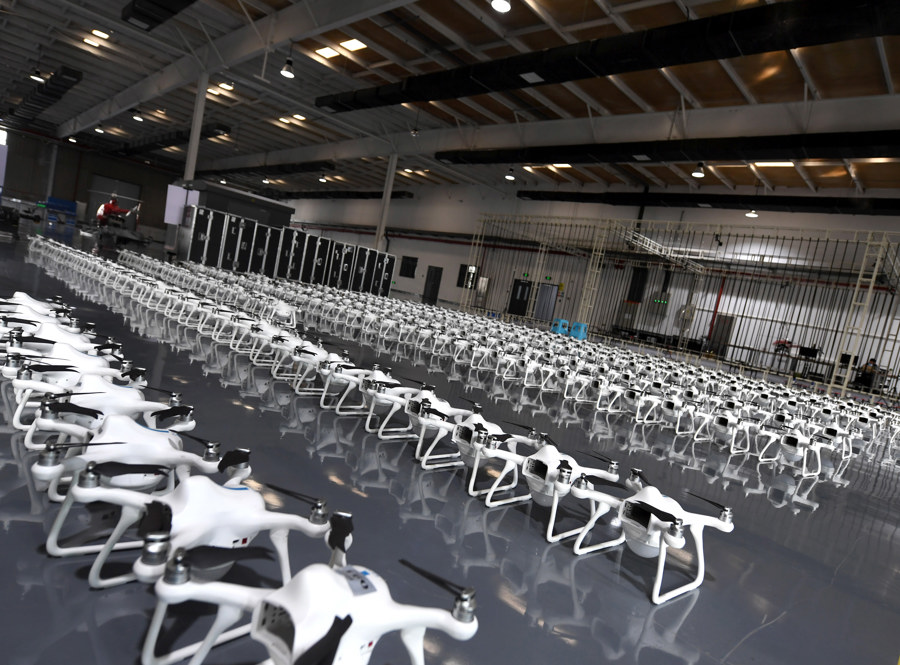
At present, the advanced aircrafts with low altitude economy are mainly vertical take-off and landing aircrafts and unmanned aerial vehicles, which can be divided into manned aircrafts (1000-6000m), industrial UAVs (120-1000m) and consumer UAVs (within 120m) according to the flight altitude. Therefore, the term "low altitude" has no exact definition of altitude, depending on regional characteristics and actual needs.
The word "economy" reflects that this field covers not only the R&D, manufacturing and sales of aircraft (aircraft), but also the manufacturing, flight, support and comprehensive services around low-altitude flight. This also makes the "low-altitude economy" another emerging economic form after the digital economy.
The term "low-altitude economy" first appeared in a news report on the front page of Anyang Daily on April 17, 2010, and has appeared in local media and various forums many times since then. It was not until February 2021 that "developing low-altitude economy" was included in the national planning for the first time, and this formulation began to appear more frequently in various media reports and policy documents.
However, in English, there is no corresponding phrase to express the concept of "low-altitude economy". After searching the database with the literal translation of "low-altitude economy", "economic field of low-altitude garden tree cultivation" appears, which is completely different from Chinese understanding. However, using "low-altitude airspace" similar to "low-altitude economy" for search failed to find relevant research.
Therefore, some experts believe that the research and development of low-altitude economy as a new economic phenomenon or economic field was initiated by China.
In recent years, with the continuous development and innovation integration of aviation manufacturing technology in China, a new generation of low-altitude scientific and technological achievements have further lowered the lower limit of the use of low-altitude airspace, increased the frequency and breadth of the use of low-altitude airspace, and continuously emerged many new achievements, new products and new formats. Faced with such a new situation, people urgently need a representative "new concept".
It is under such a call that "low-altitude economy" has become a new concept in the development of general aviation in China, and it also expresses people’s expectation for scientific allocation and management of low-altitude airspace resources.
Fly low and open more scenes.
Although the history of human exploration of low-altitude flight is very long, the appearance of low-altitude economy is relatively late. In the 18th century, the hot air balloon was successfully tested in Paris, France, and then the tour by hot air balloon developed rapidly in Europe, which was regarded as the beginning of "low-altitude economy".
However, before the 20th century, it was very difficult and costly for human beings to fly at low altitude. Therefore, low-altitude aircraft were not widely used in civil and economic fields.
It was not until the 1980s that the application scenarios of drones were gradually opened.
In the field of surveying and mapping exploration, in 1980, the multi-purpose UAV D-4 developed by Northwestern Polytechnical University was successfully tested. This UAV was mainly used for aerial surveying and mapping and geophysical prospecting, and it was successfully tested two years later. By 1995, this UAV had been put into mass production, which laid the foundation for the development of civil UAVs in China.
The application of drones in agriculture will wait until 1983. At that time, Yamaha Company of Japan received a task from the Ministry of Agriculture, Forestry and Fisheries of Japan to develop a single-rotor unmanned helicopter. Four years later, the unmanned helicopter R-50 with a load of 20 kg came out, becoming the first unmanned helicopter put into agricultural spraying practice, which greatly enhanced the production efficiency of Japanese agriculture.
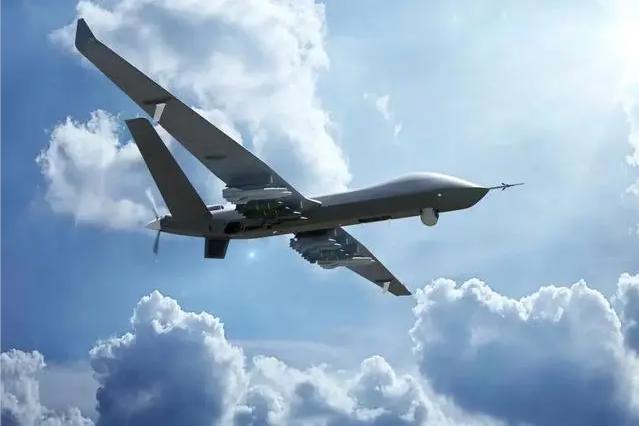 Pterosaur -2H Meteorological UAV
Subsequently, the application of drones in the meteorological field was paid attention to. In 1997, the earliest meteorological unmanned aerial vehicle, the Meteorological Scout, developed by Australian Aerosonde Company was put into use. With the deepening of the combination of UAV technology and meteorological science, the United States established a world-class UAV application center in 2003. Since then, the National Oceanic and Atmospheric Administration of the United States has started to use UAVs to track and monitor data related to tropical storms.
The drone was "upgraded" again. In 2010, Parrot released the world’s first popular quadrotor drone, AR. Drone. This drone has a built-in connection module that matches all smart phones at that time, which is very easy to control. Since then, more and more companies have begun to join the consumer drone market.
In 2011, people began to fly at low altitude. This year, the multi-axis aircraft made by German aircraft manufacturers completed the manned test flight for the first time.
Since then, the two carriers of low-altitude economy have matured, laying the foundation for this new economic form to link more elements and radiate wider fields.
"The City of the Sky" is coming soon.
"A busier day in the sky will inevitably come."
At the 2023 low-altitude economic development conference, this sentence by Fan Bangkui, an academician of China Academy of Engineering, vividly and concisely described the future prospect of low-altitude economy.
At present, the application scenarios of low-altitude economy are constantly expanding, and agricultural production, urban air traffic, urban management, cross-city traffic and other fields are being cultivated and developed.
In rural areas, taking Xinjiang’s "super cotton field" as an example, farmers can easily realize "two people manage 3,000 mu of cotton field" by applying extremely flying agricultural drones, remote sensing drones, agricultural machinery self-driving devices, agricultural Internet of Things equipment and intelligent agricultural management systems.
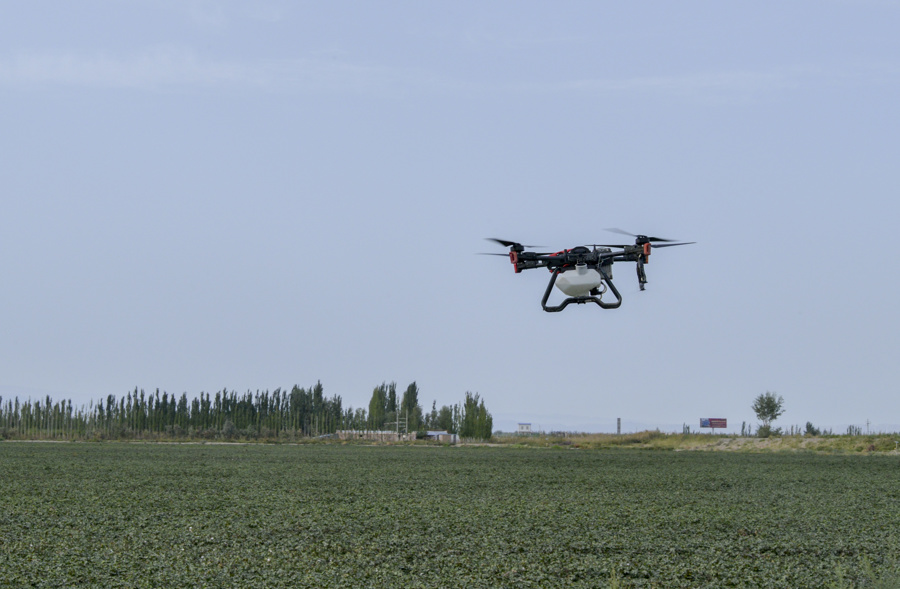 An agricultural drone shot in the "Super Cotton Field" in Yuli County, Bayinguoleng Mongolian Autonomous Prefecture, Xinjiang.
In cities, many different business districts have set up drone "aprons". Even during the "peak hours", consumers only need 15 minutes to get takeout from the sky in congested cities. From January to October 2023 alone, 74 new UAV routes were opened in Shenzhen, with a total of 153 routes, and 421,000 flights of cargo drones were completed.
Under special geographical conditions such as mountains and lakes, drones can also open up new transportation routes. In Yangcheng Lake, Jiangsu Province, drones can take off from the center of the lake and fly to the packaging center on the shore, which takes only 5 minutes, greatly improving the freshness of aquatic products. In order to effectively solve the problem of material transportation in mountainous areas, DJI unmanned aerial vehicle was used to open up transportation routes, which effectively relieved the pressure of material transportation in mountainous areas.
And between cities, a new mode of transportation is about to be born. A few days ago, a new aircraft AE200 was released in Macao. This "flying car" can take five people and is expected to have a test ride around 2025. Guo Liang, chief scientist of Geely Automobile, said that before 2030, the related services and products of flying cars will mature and gradually become a part of people’s daily travel. "Flying" may become a reality.
According to professional analysis, low-altitude economy contains infinite possibilities. In the "low-altitude" scenario, we can not only build a transportation system, but also build or upgrade an industrial system. With the emergence of more and more application scenarios, the low-altitude economy will also extend a brand-new industrial chain, which will be combined with high-tech technologies such as digital technology, intelligent technology and digital twin technology to give birth to new development forces.
Editor-in-Chief: Gong Danyun
Author: Xiao Yawen