The peak of fan retirement is coming, and the problem of large-scale blade recovery needs to be solved urgently.
"The design life of wind power core equipment is usually 20-25 years. After more than 10 years of large-scale development, the early installed wind power blades in China will gradually enter the retirement period around 2025." Qin Haiyan, secretary general of the Wind Energy Professional Committee of China Renewable Energy Society, recently told The Paper (www.thepaper.cn) that as a composite material, the recycling technology of wind turbine blades is difficult and the cost is high, and there is no ideal recycling method at home and abroad.
In the past, the average annual treatment capacity of blades in China was between 1,000 and 2,000 tons. Most retired fan blades were mainly treated by incineration and landfill, and the comprehensive utilization of composite materials was still in the engineering test stage, which had a certain impact on the environment.
However, with the vigorous development of wind power industry, the scale of retired wind turbines will become larger and larger. How to make large-scale use of retired blades on the basis of environmental protection has become the key for wind power enterprises to achieve green and sustainable development.
The data shows that since 2006, the cumulative installed capacity of wind power in China has basically doubled year by year. Jia Kebin, director of the production technology department of Longyuan Electric Power Group Co., Ltd. (Longyuan Electric Power, 001289), said that it is expected that the first retirement peak of wind turbines in China will occur between 2025 and 2030, involving 44 million kilowatts of old units; The second peak will appear in 2031-2035, and it is expected to involve 100 million kilowatts of old units; The third peak will occur between 2036 and 2040, and it is estimated that it will involve 118 million kilowatts of old units.
WindEurope has proposed that by 2025, in major wind power markets such as the European Union and the United Kingdom, it is forbidden to dispose of retired blades of wind turbines by landfill, and at the same time, it has called on the government to encourage the use of recyclable materials.
Domestically, eight departments, including the Ministry of Industry and Information Technology and the National Development and Reform Commission, recently jointly issued the "Implementation Plan for Accelerating the Comprehensive Utilization of Industrial Resources" (hereinafter referred to as the "Plan"), which included the recycling of solid waste in the new energy industry into the national top-level design document for the first time. The "Proposal" clearly proposes to promote the research and development and industrial application of emerging solid waste comprehensive utilization technologies such as waste photovoltaic modules and wind turbine blades, and explore the emerging solid waste comprehensive utilization technology route.
The peak of policy overweight and retirement is coming, which forces domestic and foreign markets to actively seek solutions for large-scale treatment of retired fans.
The difficulty lies in technology and cost
The parts with recycling value in wind turbine include tower, pedestal, nacelle cover and blades, among which 85-90% of the discarded materials have a mature recycling system, but the recycling mode of wind turbine blades is still being explored.
At present, the widely used fan blade materials in the world are composed of glass fiber reinforced thermosetting resin-based composite materials, mainly including epoxy resin, glass fiber, balsa wood, etc. After curing and molding, the chemical process cannot be reversed, and it cannot be naturally degraded without new technological treatment. Among them, the most recyclable fiber materials and epoxy resin are difficult to be separated and reused.
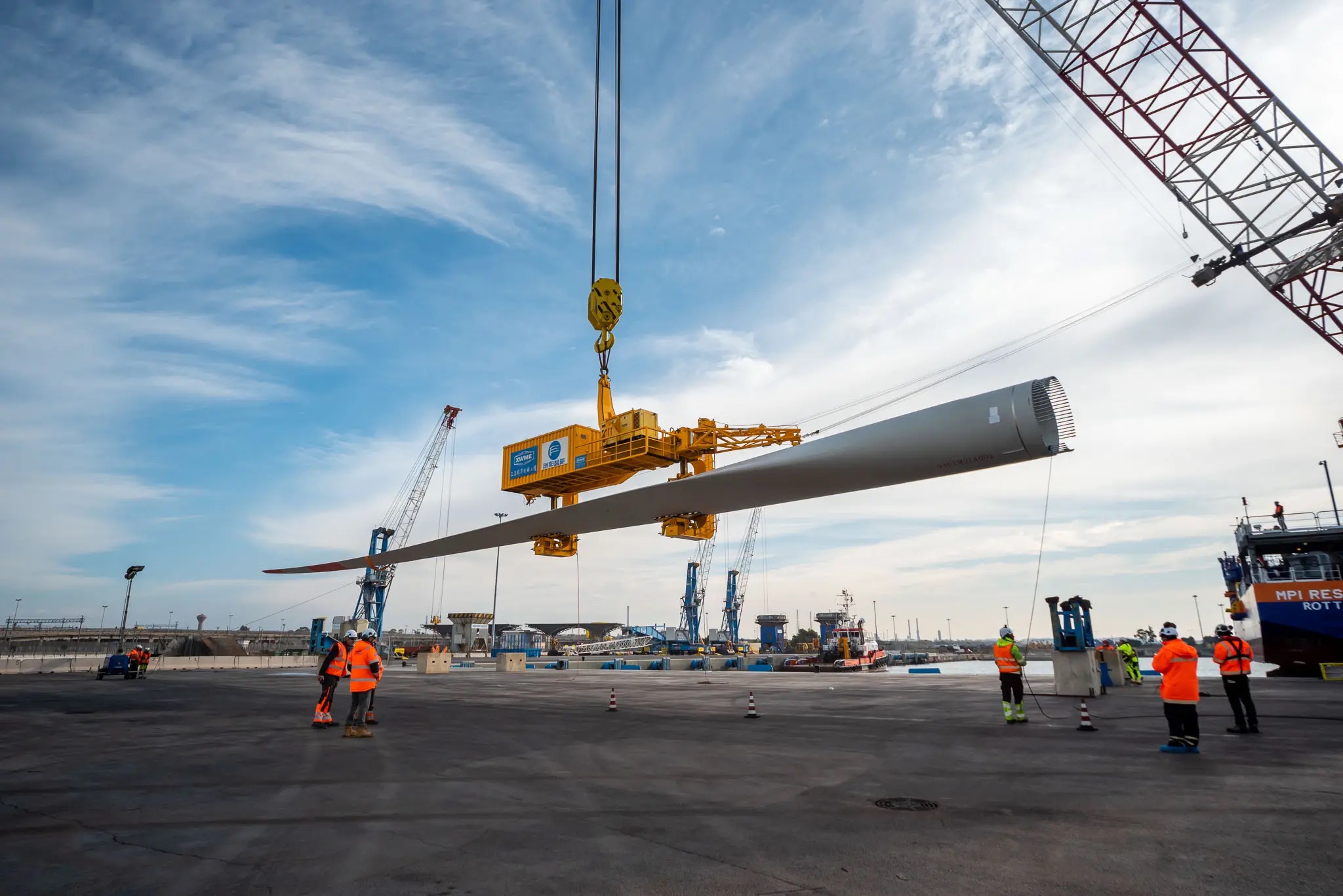
After years of exploration, many technical routes including comprehensive utilization, mechanical crushing, pyrolysis, chemical degradation and energy acquisition have been initially formed for the recovery of blade composite materials, but in practical application, it has not been widely popularized. Qin Haiyan said that due to the small scale of the current leaf recycling market and the low comprehensive utilization value of recycling, the investment enthusiasm of enterprises has been affected, resulting in the above recycling technology has not yet been industrialized.
The recovery of retired blades of a wind farm includes many links, such as site cutting, transportation, finishing at the factory, reprocessing, etc. Large-scale wind power projects are mostly located in remote areas, and the transportation radius is large, so it is difficult to concentrate. The development trend of large-scale wind turbines is superimposed, and the cost of blade cutting and transportation is high, resulting in high cost of blade recovery.
In addition, Qin Haiyan believes that at present, the construction of policies and standards system for the recycling of retired wind power units lacks an operable policy system, and the responsible subject is not clear. In terms of technical standard system, the existing standard formulation lags behind, which is not conducive to the establishment of a sound recycling system. At present, although there are guidelines for classified management of solid waste of fiber composite materials in preparation or project establishment, they obviously lag behind the development of wind power industry and cannot effectively guarantee the long-term healthy development of the industry.
International giants are at the forefront.
Global wind power technology and industry originated in Denmark, and developed in Western Europe. The giants of international wind power machine manufacturers, represented by Denmark Vestas and Siemens Gemeisa, have earlier and more experience in dealing with the decommissioning of wind turbine blades, and are at the forefront of the industry, which may provide reference ideas for domestic enterprises to deal with large-scale decommissioning of wind turbines.
In January 2020, Vestas announced that it would produce "zero waste fans" by 2040. Vestas said that "zero waste" means protecting materials and resources through responsible production and consumption (including recovery, reuse and restoration), and it is no longer necessary to break the fan blades for incineration or landfill.
A year later, Siemens Gemeisa announced a similar commitment, that by 2030, the blades will be completely recyclable, and by 2040, the sales of wind turbines will be 100% recyclable.
In addition, it is difficult to recycle thermosetting composite materials in fan blades. In May, 2021, Vestas initiated the CETEC (Thermosetting Epoxy Resin Composite Circular Economy) project, which was dedicated to solving the problem of the lack of existing recycling technology of epoxy resin.
Vestas said that in terms of material recycling, the company promised that the proportion of manufacturing waste that will eventually be landfilled will be less than 1%, and at the same time, it will ensure that more than 94% of manufacturing materials can be recycled by 2030. This indicates that the current material recovery rate of 52% will be greatly improved.
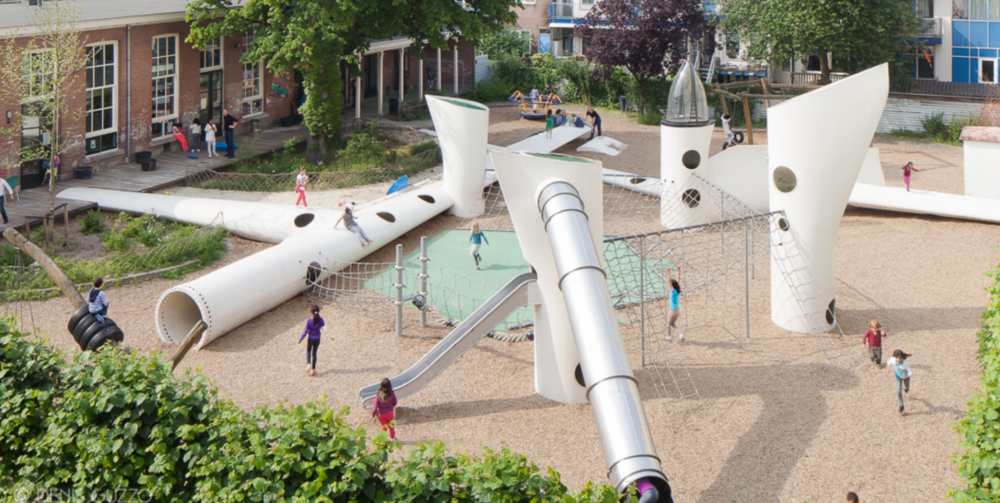
Source: Superuse Studios official website Leaf Playground Project in the Netherlands
Giles Dickson, CEO of WindEurope, said that the wind energy industry is cooperating with the chemical and composite industries to develop technologies for recycling leaf waste, but it will not be fully deployed on a large scale until 2030.
At present, there have been successful cases in cement plants. For example, the cement plant under Geocycle, a garbage recycling management company, uses collaborative disposal technology to recover the organic content of leaf waste as heat energy, and integrate the mineral part of waste as ashes into the raw materials for cement clinker production, replacing some fossil fuels and other materials in the cement production process. According to the company, 1 ton of blade waste can reduce 110 kilograms of carbon dioxide emissions and save 461 kilograms of raw materials.
However, industry stakeholders said that this solution has not been scaled up, and it still faces problems such as expensive equipment and high cost. The relatively low recycling value is difficult to motivate wind power enterprises to treat retired blades in this way.
Lisa Ekstrand, vice president and head of sustainable development of Vestas, said: "It is an urgent and critical issue to meet the waste management challenges of the renewable energy industry by building a strong recycling infrastructure. The glass fiber recycling method has now reached a node where the scale can be rapidly expanded, and with the owners of renewable energy plants paying more and more attention to the impact of their retired assets on the environment, this is no longer a question of demand or quantity. "
In addition, with the improvement of wind power technology, the generation of retired blades can be relatively reduced by implementing the transformation of old wind turbines and extending the service life of blades.
According to industry analysis, with the continuous upgrading of global wind power manufacturing technology, the service life of new wind farms in the future will be increased to 30 years or more, and some wind power developers have even begun to seek to increase the service life of wind farms to 40 years.
Qin Haiyan said that the problems faced by domestic fan blade recycling need corresponding support from policies, standards and technology research and development. He suggested that industry standards, technical specifications and certification systems should be improved as soon as possible, especially to clarify the responsible subjects and implement the lead units; Improve the recycling methods of retired blades and carry out research on recycling technology of retired blades; Strengthen the research and development of new materials for wind turbine blades and implement technical transformation to extend the service life of wind turbines.