Behind the Film The Battle at Lake Changjin: A Little-known Story
During the National Day holiday, the movie The Battle at Lake Changjin became the hottest topic. Obviously, it is only a matter of time before this film sets a new box office record in China. More importantly, it is difficult to calculate the spiritual infection and spiritual shock brought by such a movie with the box office.
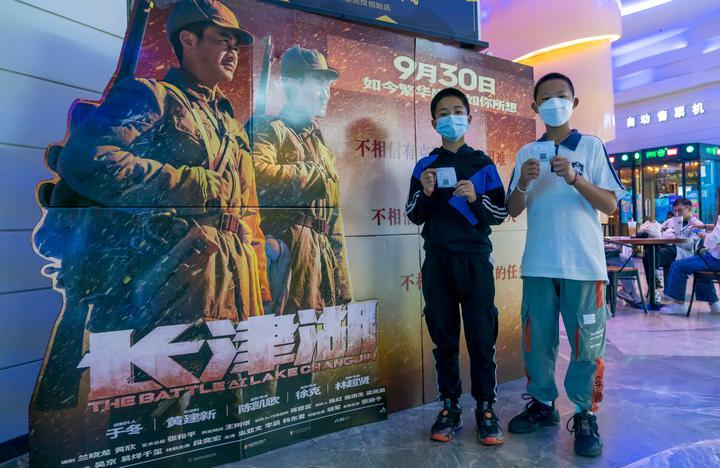
↑ In a cinema in Kunming, the audience took a group photo in front of the film The Battle at Lake Changjin exhibition board (photo taken on October 1st). Xinhua News Agency reporter Chen Xinbo photo
However, as far as the film structure is concerned, it seems that there are other ways, such as the beginning of the film.
There is such a story:
In December 1996, General Chi Haotian, Minister of National Defense, led a delegation to visit the United States. The commander of the US Marine Corps, General Charles Krolak, who received him, was in awe of this old soldier from China who had participated in the War to Resist US Aggression and Aid Korea. It turned out that Krolak’s father, Victor Krolak, was the deputy commander of the first division of the US Marine Corps during the battle of Changjin Lake, and Chi Haotian was a member of the volunteer army in a bloody battle in Changjin Lake. At that time, he was a battalion commander of the 235th regiment of the 79th Division of the 27th Army of the 9th Corps.
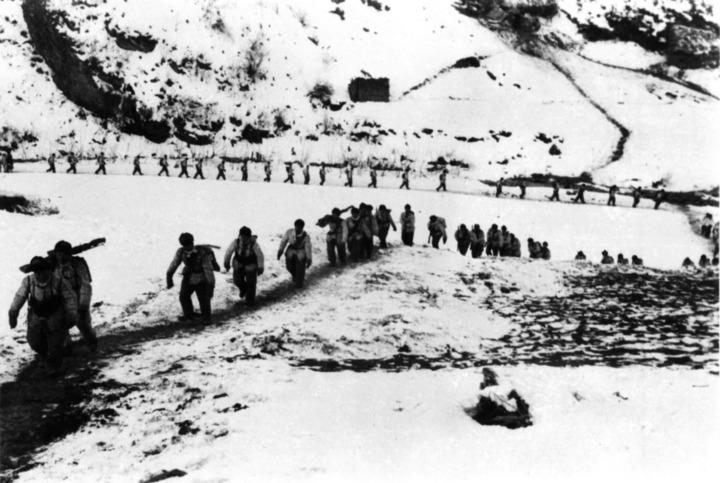
In order to annihilate the "United Nations Army" in the Xinxing Cave area, the 40th Army of the Volunteers moved very close to its flank.
The eastern front battlefield of the second campaign of the War to Resist US Aggression and Aid Korea is located in the Changjin Lake area in the north of Korea, where the terrain is dangerous, the climate is cold and the combat environment is extremely bad. On November 27th, 1950, the 9th Corps of the Volunteers launched a fierce counterattack against the US troops in the Changjin Lake area, dividing and encircling the enemy in Xinxingli, Liutanli, Dead Eagle Ridge, Xiajieyuli, Gutuli and other places, and dealt a devastating blow. The 9th Corps accomplished arduous combat tasks under the conditions of hunger and cold, sharp increase in non-combat attrition and poor equipment. Xinhua News Agency (Photo courtesy of the Memorial Hall to Resist US Aggression and Aid Korea)
In the battle of Changjin Lake, the First Marine Division, known as the "trump card among the trump cards" of the US military, paid a heavy price for the total reduction of 11,731 people. Another veteran US military force, the 31st Regiment of the Seventh Division, was wiped out. Colonel McClane was injured and captured and died. He was awarded the "Polar Bear League Flag" for his invasion of Siberia, Russia in World War I, and it also became the trophy of the volunteers. After many years, Bao Ze, director of the Operations Division of the First Marine Division, still has a lingering fear of the scene of fleeing from Changjin Lake in a panic: "I believe that the ice and snow of Changjin Lake and the deadly attack of China’s army regardless of casualties are a nightmare that lingers in every marine’s heart."
The battle of Changjin Lake was part of the second battle. When the fighting started, the 9th Corps of Volunteers led by Song Shilun had been in ambush in Changjin Lake on the Gaima Plateau in northeast Korea for six days and six nights. Their opponents are the 1st Marine Division, the 3rd and 7th Infantry Divisions of the US Army, and the 1st South Korean Army Corps.
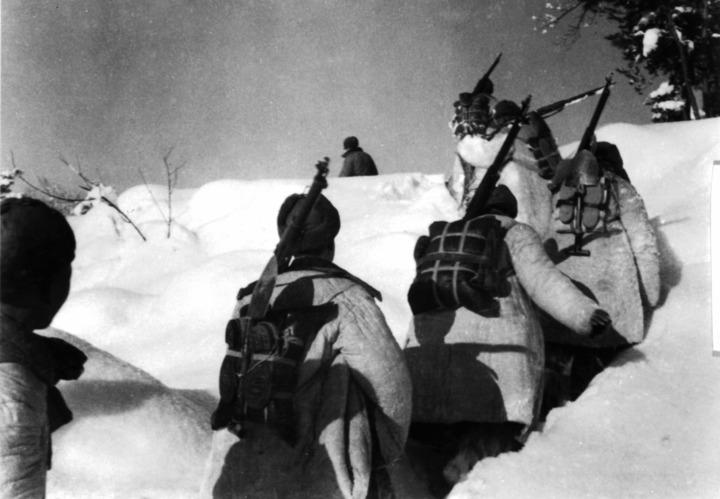
Soldiers of the 9 th Corps of the Volunteers blocked the "United Nations Army" that reinforced from Xianxing to Changjin Lake.
The eastern front battlefield of the second campaign of the War to Resist US Aggression and Aid Korea is located in the Changjin Lake area in the north of Korea, where the terrain is dangerous, the climate is cold and the combat environment is extremely bad. On November 27th, 1950, the 9th Corps of the Volunteers launched a fierce counterattack against the US troops in the Changjin Lake area, dividing and encircling the enemy in Xinxingli, Liutanli, Dead Eagle Ridge, Xiajieyuli, Gutuli and other places, and dealt a devastating blow. The 9th Corps accomplished arduous combat tasks under the conditions of hunger and cold, sharp increase in non-combat attrition and poor equipment. Xinhua News Agency (Photo courtesy of the Memorial Hall to Resist US Aggression and Aid Korea)
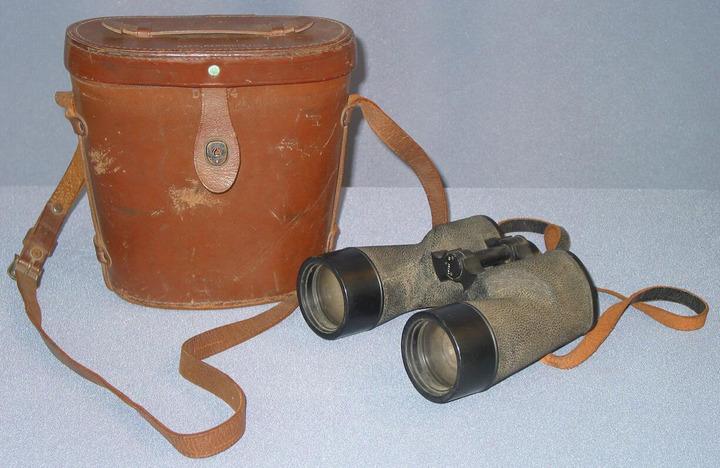
A telescope used by Song Shilun, commander of the 9th Corps of Volunteers.
The eastern front battlefield of the second campaign of the War to Resist US Aggression and Aid Korea is located in the Changjin Lake area in the north of Korea, where the terrain is dangerous, the climate is cold and the combat environment is extremely bad. On November 27th, 1950, the 9th Corps of the Volunteers launched a fierce counterattack against the US troops in the Changjin Lake area, dividing and encircling the enemy in Xinxingli, Liutanli, Dead Eagle Ridge, Xiajieyuli, Gutuli and other places, and dealt a devastating blow. The 9th Corps accomplished arduous combat tasks under the conditions of hunger and cold, sharp increase in non-combat attrition and poor equipment. Xinhua News Agency (Photo courtesy of the Memorial Hall to Resist US Aggression and Aid Korea)
From East China, many officers and men rushed to the 9 th Corps of the Korean battlefield, still wearing light clothes, and their food was frozen potatoes. On the other hand, American soldiers on the same battlefield live in warm tents with diesel stoves and wear thick duck down clothes. Each person can get three Meat series cans and three Biscuit series cans with a net weight of 227 grams every day. The former is mainly meat, including meat and vegetables. The latter is mainly biscuits, including candy and coffee, cocoa powder or lemon powder, etc.
John toland, an American writer, wrote in his book The Long Battle: Korean War in the Eyes of Americans with admiration, "The only anti-freezing measure for China soldiers is to paste their feet with lard and suet to prevent frostbite, but they have shown the most incredible courage and willpower in the history of human war. Hundreds of thousands of officers and men trekked in the snowy glaciers and crossed the barrage fire in the cold of MINUS 20 degrees Celsius. "
In the second battle, the volunteers fought the "United Nations Army" in the ice and snow for 47 days, and wiped out more than 36,000 people, including 24,000 American troops. Captured and destroyed more than 1,000 guns, more than 3,000 cars, more than 200 tanks and armored vehicles, seized 6 planes, and recovered Pyongyang, the capital of North Korea, which had been occupied for 43 days … and turned the tide in one fell swoop.
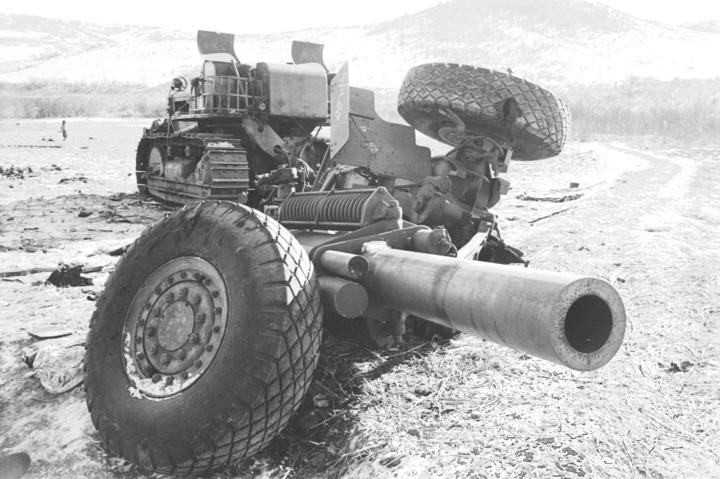
In December, 1950, Chinese people’s Volunteer Army cooperated with the Korean People’s Army to attack the invading American army and the South Korean army, stopped the American troops on the eastern front in the area south of Huangcaoling, and forced the enemy to retreat to the south of Qingchuan River. The picture shows the American howitzer captured on the bank of Changjin Lake in the Eastern Front. Information of Press and Photography Bureau Cai Shangxiong Ge Liqun photo
At the end of the campaign, the day before Christmas in the west, david duncan, a famous American photographer, asked an American soldier: If I were God, what would you want? The soldier bowed his head and pondered for a while, and struggled to say a word: "tomorrow."
Many American soldiers will never see tomorrow again, including Lieutenant General Walker, commander of the Eighth Army of the United States. Walker, nicknamed "Bulldog", was killed in a car accident on his way back, and died just before Christmas.
The "Christmas offensive" boasted by MacArthur, Commander-in-Chief of the "United Nations Army", has completely become a bubble, but the nightmare of death has become a "Christmas" gift for American soldiers.
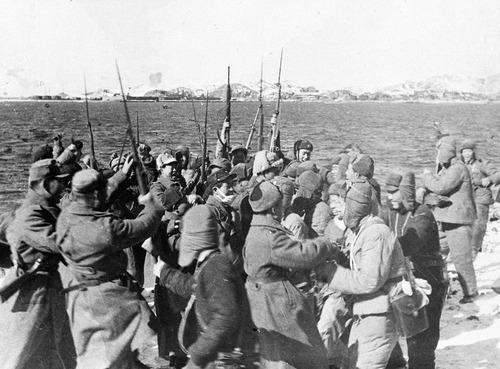
On November 25, 1950, the U.S. invading army assembled more than 200,000 troops in the DPRK and launched the so-called "general offensive to end the Korean War". However, the Chinese and Korean people’s armies quickly started a counterattack, which caused great losses to the enemy. Illustration: After eliminating the enemy from Changjin Lake to Yuanshan Mountain, the Chinese and Korean people’s armies joined forces on the east coast. Photo by Zhang Chongxi
Chinese people’s Volunteer Army’s bravery, tenacity and perseverance left a deep impression on the American troops participating in the war. Old Krolak, deputy commander of the First Marine Division, left this impression to his son Krolak Jr., that is, Admiral Charles Krolak, commander of the US Marine Corps in the 1990s.
During General Chi Haotian’s visit to the United States in 1996, China’s military delegation was invited to visit the latest MlA2 tank at Fort Hood. Fort Hood base, named after john hood, an important general during the American Civil War, is also the permanent training base of the 1st Division of American Cavalry. In the first battle to resist U.S. aggression and aid Korea, the U.S. military and the volunteers fought for the first time, and they were hit hard by riding a division, with 1840 soldiers injured. It was also the first defeat of the First Riding Division, which is known as the "Founding Father’s Division" of the United States.
Chi Haotian once recalled: After the American personnel introduced the performance and electronic system of the tank, they suggested that I test-fire a gun. I’ll fight when I say so. I was never afraid in the battlefield to resist US aggression and aid Korea. What’s the matter? As a result, I fired at the target and hit it with one shot. The intercom reported, "the target distance is 1500 meters, one hit!"
Then, if such a true story is written into the film The Battle at Lake Changjin, is it more meaningful? (Jia Yong)
Editor: Zhang Ruijie
Reporting/feedback